What It Costs to Print a Board Game Prototype in the United States
A first-time designer can spend as little as $0–$20 on a home-built playtest prototype. But when you’re ready to present your game to investors or publish the game, a single manufacturer-made prototype costs $150–$200.
GaymerX desk · 5 min read · updated 2026
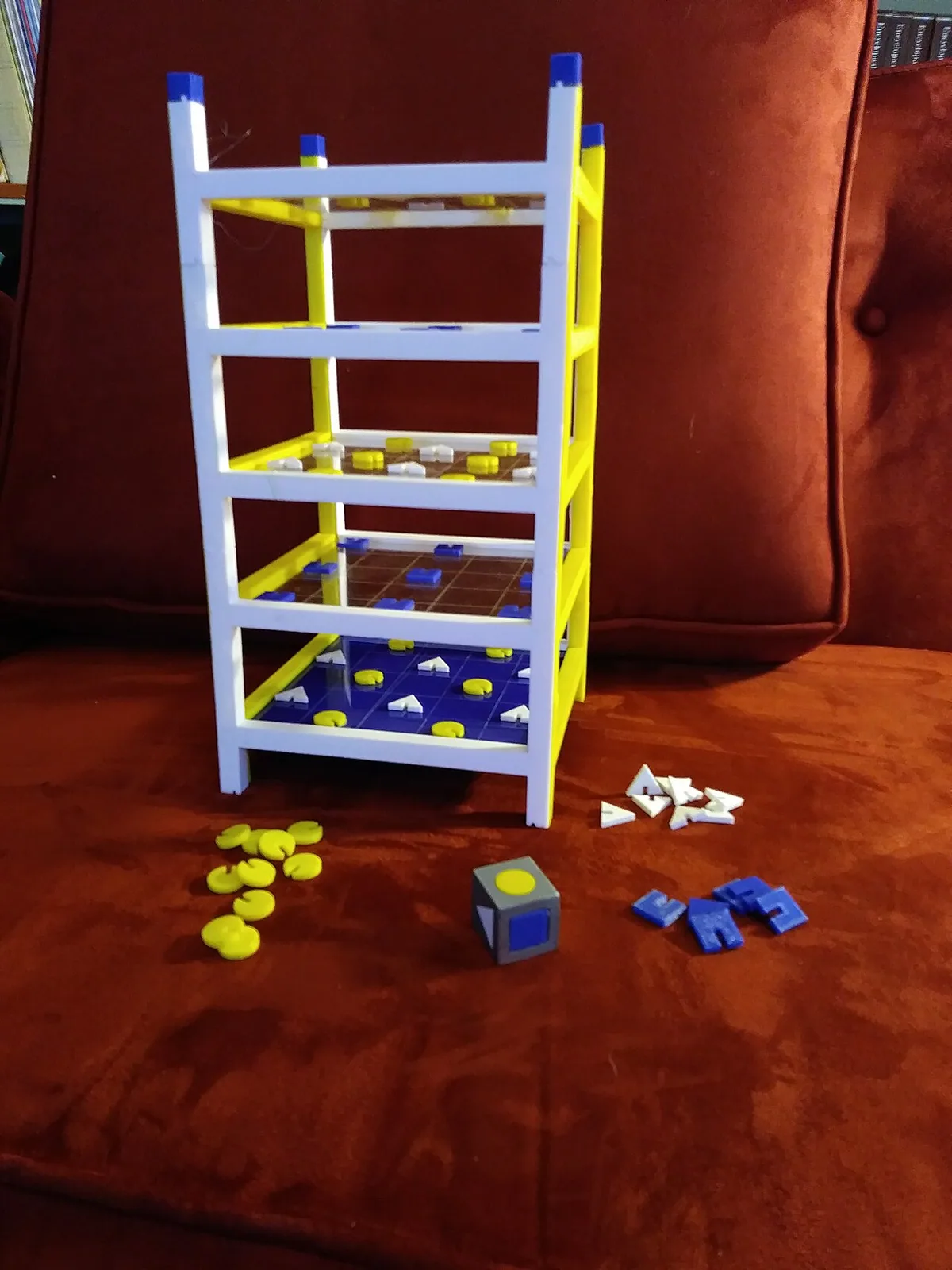
A first-time designer can spend as little as $0–$20 on a home-built playtest prototype. But when you’re ready to present your game to investors or publish the game, a single manufacturer-made prototype costs $150–$200. Here’s a component-by-component estimate of prototype costs in the U.S. From the cheapest test builds to overseas manufacturer runs.
The Cheapest Prototype Is Not a Printed Prototype
The initial model you need, often called the “home-run prototype,” doesn’t need to be printed. Launch Tabletop suggests using a cobbled-together one-of-a-kind draft. You can make a playable or near- playable test build out of index cards, construction paper, buttons, and pilfered components from other board games.
“You might spend a small amount on craft-store or office-supply materials to make a one-of-a-kind copy,” according to Launch Tabletop advisors. “Keep in mind, it’s a one-of-a-kind. When your playtesters break it, that’s fine. Make another. Or just keep that one and make a better one a little later to rebuild it with.”
Launch Tabletop describes prototyping as an incremental exercise. As you collect feedback, you make a better version. “Then an even better version,” the company says. “And then you look at paper quality and coatings and game boxes and graphic designers and playtester incentives. That last test can cost you hundreds of dollars, but the very first one shouldn’t cost you a dime!”
What a Single Manufactured Prototype Actually Costs
Playtest prototypes are not manufactured prototypes. When you need a presentation-quality one of a kind, or copies to leave with playtesters in case their $20 index-card-and-paper prototype version breaks down, you’re no longer at the $0–20 cost level. Per-unit costs for common board game components speak to the sudden scale-up in prototype expense:
- Card games: $12–$18 per prototype.
- Basic board games: $30–$60 each.
- Custom miniature components: $100 or more. Pricing for additional components varies by vendor and complexity.
Even at the $12 per set range, card games prompt a significant outlay. Deck makers do not offer a four-of-a-kind prototype option.
Launch Tabletop describes the cost of a single prototype board or card game as $150 to $200. These estimates include board, box, and “standard” components. There are caveats: “We calculate the cost per unit of printed product. We consider the base game and assume standard materials. Custom materials and game parts add to costs [sic].”
The Hidden Component-Sized Charges People Miss
A raw unit cost does not include the presentation features you come to expect from a published prototype. PrintNinja, which does not offer prototype runs, as much as demonstrates the non-core component cost add-ons.
Clear plastic sleeves and card edge reinforcements could add $1.50 to $3 per deck, says the vendor. Custom card backs add no percentage cost, but stock options are usually grade-A or grade-B, and better means a higher per-stack premium.
Digitally printed game boards and playmats incur a $100 component cost, and screen-printed versions will cost around $150. Die-cut tiles and punchout pieces incur $100 per sheet. Dividers add $200.
“Stock plastic or wooden materials are free,” says PrintNinja. “Custom pieces cost TBD per piece.”
Round out the prototype cost with tooled and cast components with costs ranging from $150 for custom dice to— custom metal dice can cost $2000 or more.
Some U.S. printers cite tariffs and import duties for single-row per-animation prototypes shipped from Asia, though exact costs vary by case.
Short Runs Behave Differently Than One-Offs
Short-run batches drive costs in a different direction from one-off prototypes. When you go beyond a one-off to a run of 10 or 20 units, the base manufacturing cost drops because time spent retooling is shared among more units. Take booster packs as an example. Manufacturers may need to create grouping sheets for multiple units, which can affect pricing structures by separating tooling and custom material charges.
MB Print offers a cost estimate for 10 copies of a basic boxed board game. A game description in the price estimator includes six scenarios customized with a title, inhouse print quotes: Title frame, deck of cards, folding board, tokens, and rules
The Polish printer’s page explains that “Polish trading posts receive and settle invoices after standard warehouse storage [sic]. Once the financial settlement of the advance payment is complete, the form is sent to a blank storage zone at the cost of conversion. To calculate on the order cost, you can use this aproximation rule:
To order a prototype, you need to log in to the customer panel. We do not provide prices to unauthorized users, as each model is calculated individually by an employee and depends on many factors—the examples shown reflect final costs only.
Kylin Manufactory cites a $20–$50 per-unit charge for runs in the 100–500 piece range, and a $10–$20 cost reduction for 500–1,000 units. That’s a compound reduction at the unit level, but it means the batch-level costs increase. “One to 1,000 copies of the game stand as an option,” say the manufacturers. “One thousand copies can cost USD 4,500, or $4.50 per game at required units.”
Shipping, and the Overseas-Run Problem
Shipping options for KBPrint products vary depending on the vendor and specific requirements. For detailed information on available shipping methods, including potential partnerships with carriers, consult the vendor directly or refer to the product documentation. Exact shipping arrangements may differ based on location and order specifics.
Clear dice, signatures, and cut-outs: one-off components do NOT include manufacturing or shipping costs. Our prototype shops for these units individually, and our vendors sends them along with the standard order.”
What Not to Overread in Vendor Quotes
Price quotes for yields are often basic estimates.
PrintNinja does not offer printing options for prototypes, and its proofing costs give an inflated sense of the cost components. That $50 playmat, $200 divider, $150 die charge should raise your eyebrow for modern notation and beneficiary vendors.
Consider those to be proof-of-concept prices, not prices for a normal prototype run.
Klin Manufacturing is affordable on the per-unit cost, but the numbers reflect a minimum run size that is more manufacturer-friendly—1,000 units produces per-unit pricing at $4.50.
PrintNinja's pricing helps illustrate the cost of individual components, which can be more affordable for certain elements like publisher-private cards.