Who Owns the Game You Made at a Game Jam
When a team of collaborators makes a game prototype in a game jam, a question quickly follows: does everyone own a piece, or is the creator is the sole owner? The answer isn't always what the designers assume.
GaymerX desk · 8 min read · updated 2026
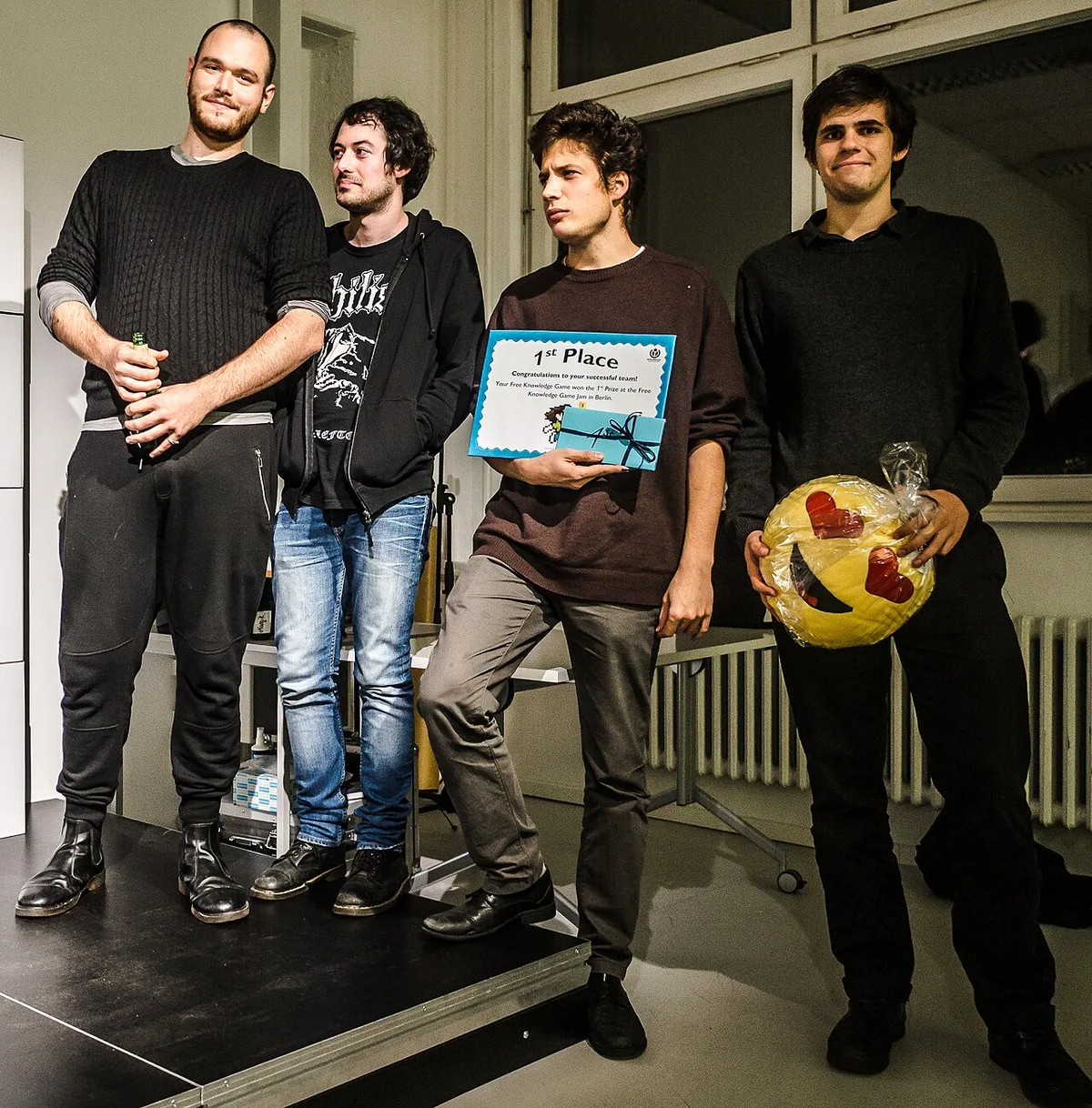
When a team of collaborators makes a game prototype in a game jam, a question quickly follows: does everyone own a piece, or is the creator is the sole owner? The answer isn't always what the designers assume.
Ownership is indeed the default rule in the U.S. and many other jurisdictions. When two or more authors, in p[ursance of a common design, together create a single work, "they become joint owners of the work," says the U.S. Copyright Office. This default rule can leave out key decisions, especially if the team wants to use its prototype after the jam.
Ownership Between Teammates
A basic building block of copyright is joint authorship. "When two or more authors in pursance of a common design together create a single work, they become joint owners of the work," the Copyright Office explains in a 2006 [study on the topic. The study page will also give you a boosted list of sources, dissents, and other legal docs, even the forms the Copyright Office uses. If you're a librarian or researcher, there's a separate page just for you.
Because game jam works are a single unified work, their collaborators are treated as joint owners, says the University of California in its guide to joint authorship. Each collaborator is an equal owner of the entire finished work, unless the authors make an agreement otherwise. An agreement is best documented in writing, as recognized in guides on single and multiple authorship.
If each joint author can own the whole, does that mean either person can do whatever they like with it? No, Nolo explains in a 2022 guide on joint copyright ownership versus collective works. Each joint copyright owner has the same right as any other owner to register and enforce the copyright. But any one owner cannot deal with the work to the detriment or disadvantage of the other owner. So, one co-author cannot alter the work without the permission of the other co-authors.
Neither can a co-author supercede the copyright of the others, even for fair use or in pursuit of commercial aims. University of Texas Libraries' 2019 guide to copyright ownership explains further. Under the Texas analysis, joint ownership arises when 1) both copyrightable contributions and 2) an intention, at the time of creation, to be joint creators of the whole finished work. Texas courts see joint authorship arising only when the collaborators expected that the contributions be combined into a unified whole and that they would become joint owners.
What the Jam Rules Change
The default rule applies to a jam team without an agreement. But the reality of a game jam is that there are rules already in place. The Global Game Jam, for example, flatly states that "creator(s) retain full copyright and IP ownership of their game and any originally created elements." As for sharing, the jam policies specify that participants should include all required information about the license or licenses they wish to share under, listing open-source MIT and CC 4.0 as examples.
At first glance, the Global Game Jam's policy seems simple: the jam creators own the work and any original elements, and they can decide on a sharing license. But the co-owner rule the U.S. Copyright Office spells out could still apply to a jam game if the team considers the jam entry to be one unified work that all collaborators are creating together. The open-source MIT and CC 4.0 licenses the rules suggest could also apply automatically to shareable parts of the game, but not other parts the team leaves out.
Assets You Did Not Make
Most jam prototypes rely in part on assets the team borrow, subscribe to, or purchase: stock art, frameworks, APIs, or tools. These assets have their own licensing, separate from the problem of who co-owns the prototype, which is a question that jams do not answer in favor of creators. You have to look at the asset's license terms.
The work-for-hire rule could affect a team's freedom to use an asset, notes the University of California. A work made for hire is defined in the copyright statutes as 1) a work prepared by an employee within the scope of their employment, or 2) a work specially ordered or commissioned falling into one of nine statutory categories. The law provides that the employer or the party ordering or commissioning the work is considered the author and owns the copyrights. Thus, when a company or specific party pays for a work to be created for it, that entity is the copyright owner of the work, not the actual creator.
So in the jam context, if a team uses stock art, a framework, or a tool under a work-for-hire agreement, do those creators own the asset, or has someone else already? And if the team procures or licenses an asset but doesn't document the agreement, can it become a work made for hire or instead be abandoned or lost after the event? This is a complex issue that can go in one of a dozen ways, but clear terms may avoid both. For specifics, watch the written license agreement, whether it's a jam-specific license or the asset provider's terms of use.
How Teams Keep Building After the Jam
By this point, you can see that it takes more than clicking "Build" to know who owns what after a jam. You have to establish the ownership and collaboration rules in writing, before the jam. Then you either acknowledge that rule in your jam entry, or you make the jam-specific license apply to the entry itself and not any unreleased proprietary assets. This doesn't lock anything, but it makes ownership clear to all.
"Proprietary assets" means your unreleased game code, for example, and doesn't leap to sound effects, music, or art that you don't own. At least, it can't, because the rule of thumb for that would treat the jam game as the sole work unit of the jam. Those assets transfer with the game, even if they're not cared for.
To avoid that misunderstanding, the team needs a document specifying what each participant can do with the jam output, including assets not available to everyone. The document may need a lawyer familiar with copyright and intellectual property. But having it in writing, and acknowledging that others can read it, can benefit the team.
When It Becomes a Lawyer Question
No matter how much you read copyright office documents or read up, you may still end up needing a lawyer. Some questions the documents can't answer. An article on nolo.com lists questions like: Can a license override joint authorship and make the work non-copyright? What if a single joint author registers the work and fails to include other co-owners?
The video game lawyers at Obermayer suggest that a collaboration agreement can define collaborators' rights and responsibilities. But they say it's important to consider the form the collaboration is taking, such as a corporation or a partnership. A collaboration agreement can also cover costs, work hours, and the year the collaboration will continue, before or after the jam.
Because most of the article treats the jam entry and project as a single work, jointly created, the legal points told already apply. Each joint author, meaning participant, benefits equally from the jam entry, according to legal publishing attorney Justine Graykin. But each has a duty not to put the others' work at risk by act or omission, and to hand over a percentage of their share equal to the percentage they're reusing or copying. Lawyer Kristin Seipel agrees, emphasizing the importance of getting it all in writing and understanding its implications.
The Trap in the Trigger
Most of this article assumes the jam game and the prototype are the same thing, or that a jam entry holds the project as-created, with intellectual property allocation and delegation revealed. But as we saw, relating the jam rules to the copyright office guidance doesn't let that assumption last. Unified works are jointly, equally owned. Collaborating to create a unity ends that oneness in the eye of law. So before it does, plan the jam, the prototype, and the future collaboration. At least put the plan in writing.
It's tempting to assume a GIA joint work structure, because most jams present as hack days and immersion days. But a giant shared whiteboard map and workspace is also a space for independent contributions to be gathered into a unified whole, as some legal consultants suggest. Independent contributions made and intended to be gathered into a unity can qualify as joint work. And works done outside of work, as in open-source projects, are by default the author's, not a company's, according to the U.S. Copyright Office. Make sure the project sponsors and complying contributors know that.
Most games are software, and recent years have seen an increase in software license exceptions for open-source. This year, Creative Commons is part of the trend, with representatives confirming their involvement in the movement.
But independent contributions don't auto-assume the same. Even under the law-protected work-for-hire rule, an asset's terms are what the original license agreement states. If the jam rules don't spell it out, but a judge steps in, asset rules still dictate the terms that would otherwise block the jam game's release.
The Take-Home
In summary, ask a lawyer before a game jam—there's actually a good reason why most jams sponsor lawyers.^{1} Because law librarians can't be reached and game law lawyers can't be found and the courts keep amending the copyrights, you're probably going to need an attorney. Otherwise, the whole jam might just get bundled.^{9}
But the best-case takeaway is this: Assume the jam game is a joint work, because you're collaborating and need to be in sync. But specify what each teammate can reuse, copy, or incorporate later. Spell it out for the partner APIs and second-party technologies, too.